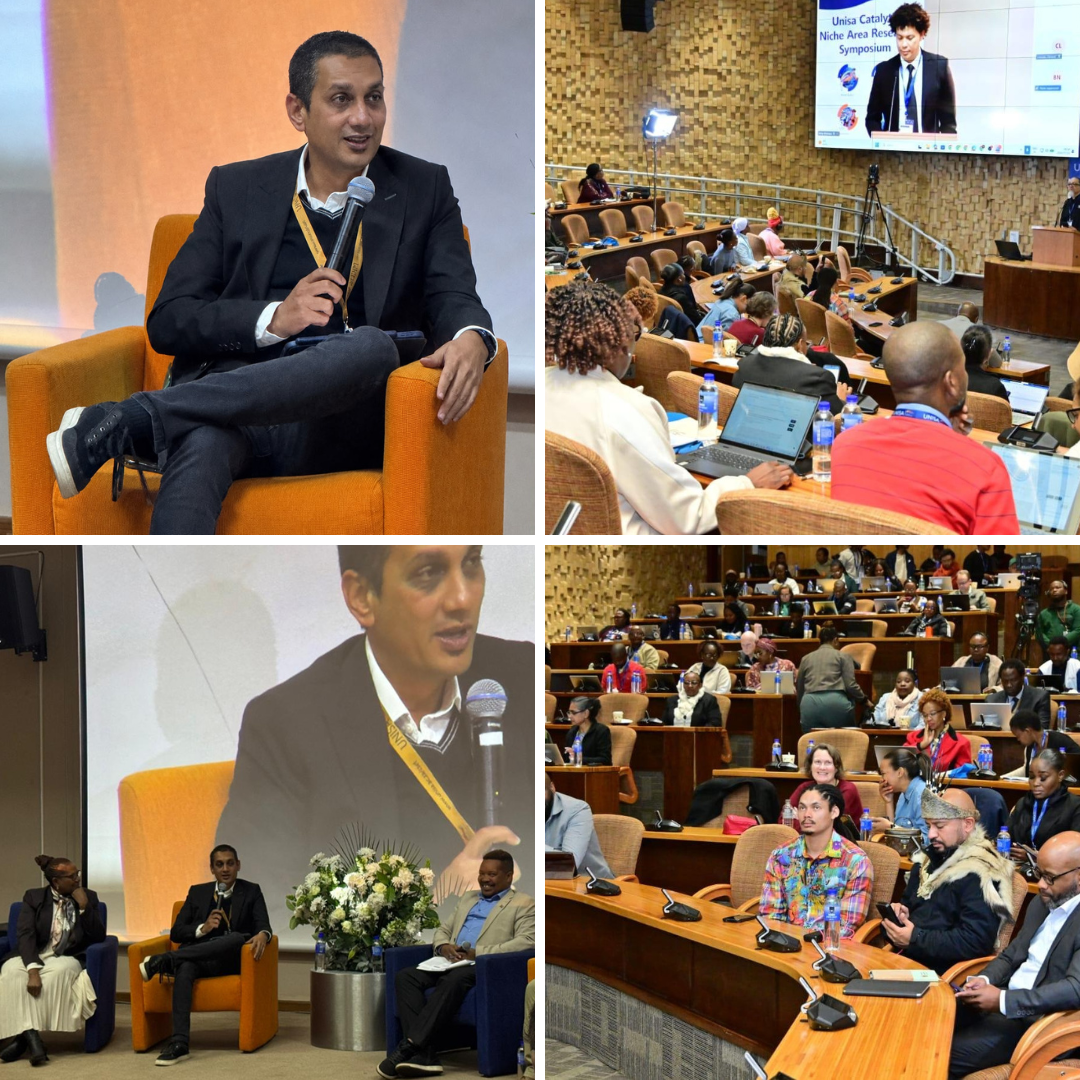
| On 29 July 2026, NAACAM CEO Renai Moothilal participated as a panelist at the University of South Africa (UNISA) Catalytic Niche Area Research Symposium, contributing to the discussion on “From ICE to NEV: Securing South Africa’s Export Future in a Decarbonising World.” Close to half of South Africa’s vehicle exports go to the UK and EU, both moving to end new ICE sales within the next decade. While this places legacy ICE-related roles at risk if production doesn’t pivot, the transition also creates new employment opportunity in segments like high-voltage wiring harnesses (c.1,400 jobs), thermal management systems (c.1,600 jobs) and hydrogen fuel cells (c.370 jobs), with more potential across battery, e-motor and power electronics localisation. Encouragingly, many of the manufacturing skills required are transferable, meaning from a skills perspective, the transition is largely about reskilling and upskilling rather than displacement. The transition to new energy vehicles presents significant challenges for South Africa’s automotive component sector. Still, it also creates an opportunity to strengthen our industrial base through deeper localisation, investment and innovation. As discussed during the panel, many of the skills required for future manufacturing are transferable, and with the right policy environment, South Africa can position itself as a globally competitive manufacturing hub. Commenting on the discussion, NAACAM CEO Renai Moothilal said: “South Africa’s transition to new energy vehicles should not be viewed primarily as a risk, but as an opportunity to deepen localisation, grow advanced manufacturing and create quality jobs. With the right policy framework and stronger collaboration between industry and academia, we can build globally competitive supply chains while developing the skills and technologies that will underpin the next generation of automotive manufacturing.” Universities have an important role to play in this transition. As localisation deepens and greater value addition takes place locally, the sector’s need for research and development capacity will grow accordingly. Stronger partnerships between industry and academia can accelerate that R&D, support technology adoption, develop future skills, and give manufacturers access to South Africa’s extensive university research and innovation network. Thank you to UNISA and Prof Mothibeli Pita for convening the discussion. #Localisation #AutomotiveManufacturing #NEVs #ResearchAndInnovation #SkillsDevelopment #IndustrialPolicy #WeAreNAACAM |